From Robotics to Resilience: Why I Left SpaceX to Fix the Wilderness of Disability Services
Story shared by Darcie Crane - Creative Writer & Accessibility Analyst
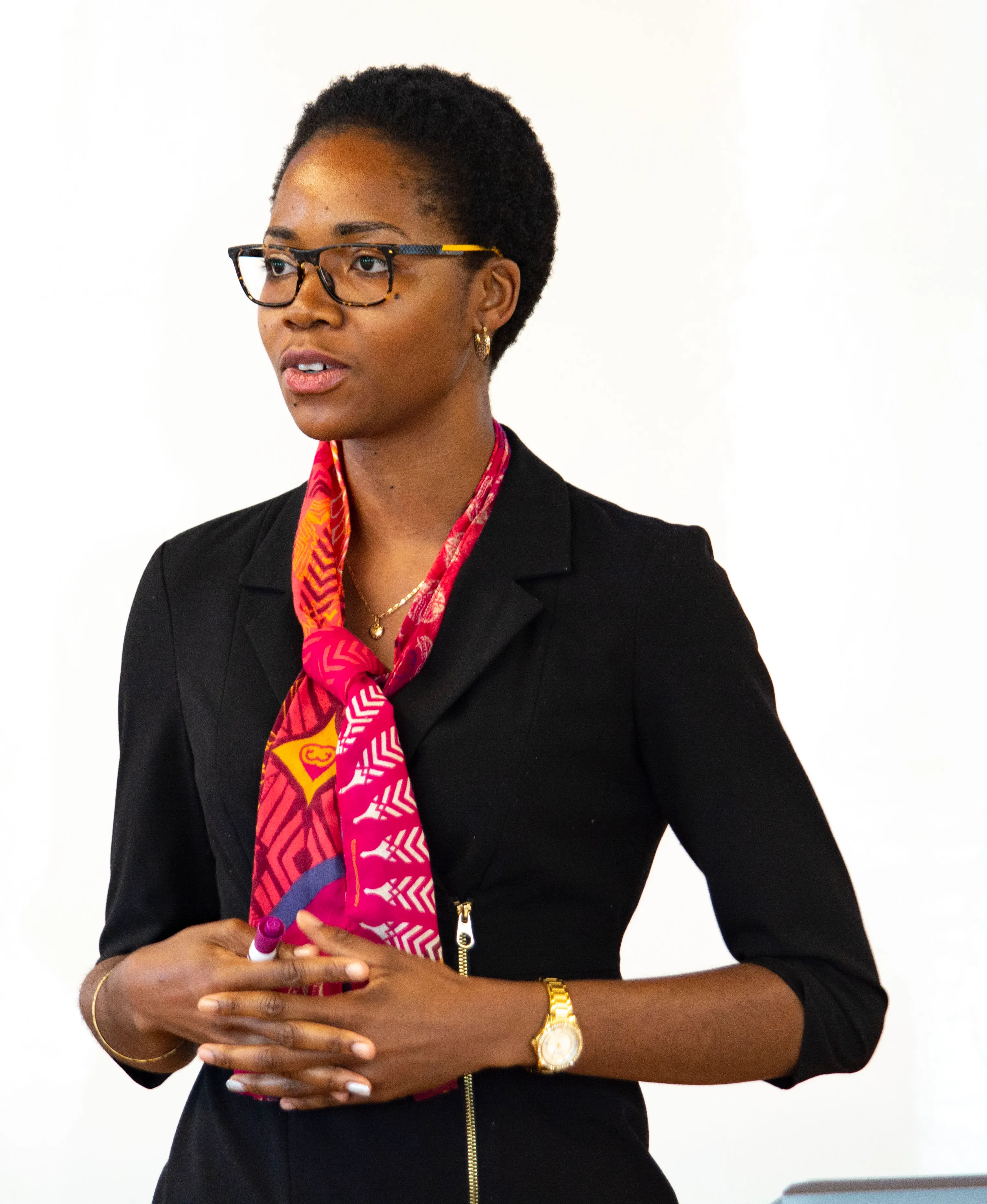
Key Takeaways: AKALAKA’s dual B-Corp/501(c)(3) model, solving the human ‘three-body problem’ in caregiving, and how healthy doses of BarNone™ turn isolation into community connection.
When Dr. Victoria Chibuogu Nneji became the first person to earn a Ph.D. in Robotics from Duke University, she was on a trajectory straight toward the stars. She had just been offered a fellowship at SpaceX to help develop systems for their first human spaceflight launch.
But then, reality hit home.
As she got this incredible career opportunity, her family experienced a life-changing crisis. Victoria unexpectedly needed to step in as the primary care partner for her loved ones, who required round-the-clock care. When SpaceX could not accommodate her need to work remotely and be present for her family, Victoria made a choice: she turned down the fellowship.
She grounded herself to focus on the hardest engineering problem she had ever faced: navigating the American long-term care system.
Today, Dr. Nneji is the Founder and CEO of AKALAKA—a Certified B Corporation paired with a 501(c)(3) fiscal sponsorship. She is building the exact caregiving infrastructure her family needed, designed to drive a verified Social Return on Investment (SROI) for the community.
We sat down with Victoria to discuss her journey from computational science to caregiving, the “Three-Body Problem” of the care economy, and how lived experience is an underestimated credential.
The Invisible Labor of “Just Being Family”
Darcie Crane (DC): Victoria, you were caregiving long before you turned down SpaceX. Can you describe how your journey as a care partner began?
Dr. Victoria Chibuogu Nneji (VCN): I’ve been caregiving for my family for over two decades. But for most of that time, I did not identify as a “caregiver.” I only thought what I was doing was just being a dedicated family member.
I ended up balancing these dual (and oftentimes fourfold) roles of being a student and a professional, and being a care partner and a relative, all while not having the language to describe what I was going through. I was just trying my best to manage things. I remember feeling so much stress around making sure I was getting medications right or conducting procedures correctly. I didn’t have any medical training, but I felt like I was doing the work of a pharmacist, a nurse, and a physical therapist all at once in my own home.
We would go to appointments at the hospital, and they would hand us these treatment plans, fully expecting that we would be able to execute them without providing any structured support or practical resources for the 99% of life outside of the appointment at home or in the community.
Mapping the Wilderness of Disability Services
DC: When did you realize that the system itself was the problem, and not just your family’s specific situation?
VCN: When the pandemic hit, all of our daytime supports vanished overnight. I was managing three jobs at once, two of which were unpaid caregiving. I was completely exhausted.
I ended up dedicating a whole month during the pandemic just to read our insurance policy manual for long-term care coverage. It was over 300 pages long. By the time I finished, I felt a sense of relief because I finally had the language to better advocate for my family.
But honestly? I was also really mad. No one should ever have to do what I had just done simply to access what they already have a right to by law.
By that point, I had already earned a Ph.D. in robotics. I had built mathematical models for staffing operation centers managing future fleets of flying autonomous cars for major airlines. I was used to difficult things! But nothing in my training ever prepared me for how incomprehensibly complex it would be to navigate disability services. I began to question: Is this a “me” problem? Am I missing something?
I spent one summer interviewing almost 100 other people navigating long-term care, and I quickly realized it’s a “we” problem. I kept hearing the same challenges in different forms: people feeling entirely alone, feeling really lost, and trying to navigate what I call the wilderness of disability services.
After 6 months of seeking solutions from anyone but me, plus 3 months of being reminded of how painful this problem really is for everyone who goes through it, I thank God for giving me the courage to be the one to start AKALAKA.
Solving the Care Economy’s “Three-Body Problem”
DC: How did your background in robotics and systems engineering influence the design of AKALAKA?
VCN: In economics and physics, there is a concept called the “three-body problem.” In caregiving, we face a human three-body problem:
- The person needing care
- The family care partner
- The professional caregiver (Direct Support Professional)
Currently, professional caregivers are deeply undervalued and underpaid, which leads to massive turnover. When that professional is not supported, the family care partner has to step in, which prevents them from fully participating in the economy. It’s a broken loop.
With AKALAKA, we use human-centered design to solve this. We collaborate with major health plans like Trillium Health Resources as an authorized NC Tracks provider. We don’t just point families to resources; we deliver consultative services and care navigation through a rigorous training program to scout, graduate, and hire Certified Peer Facilitators (CPFs).
These are individuals with their own lived experience—care partners and disabled adults—who step in as local leaders to guide their peers. We want to build a future where accessing care is as seamless as ordering a shirt on Amazon, but with the profound, added value of being cared for by a highly trained community member who actually understands what you are going through.
DC: Caregiving can be so isolating. How is AKALAKA bringing people together in the physical world?
VCN: That is exactly why we created BarNone™, our inclusive community-based model. We host spirit-free, farm-to-table pop-ups that enjoy healthy doses of social connection and food as medicine. It’s a space where adults with disabilities and peer facilitators gain inclusive workforce development skills, and families can just breathe and connect in a joyful, local community gathering.
Turning “Lived Experience” into a Trailblazing Career
DC: What is the ultimate vision for AKALAKA moving forward?
VCN: The word “Akalaka” comes from the Igbo language of Nigeria. The literal translation is “handprints,” and the figurative meaning is “destiny.”
I had trepidation about starting this because my professional training was in engineering, not healthcare. But I realized that my lived experience was the ultimate credential.
There are over 60 million people nationwide who are part of an “invisible workforce” of unpaid caregivers. They have overcome systemic roadblocks. They have managed crises. Those are highly valuable skills.
At AKALAKA, we want people to be able to choose to care without having to choose between caring and making a living. We are building the infrastructure so that when we join hand in hand, we can handle life together.
Are you a family care partner navigating the wilderness of disability services in North Carolina? Connect with an AKALAKA Certified Peer Facilitator today to reduce your isolation, secure financial resources, and make Medicaid work for your family.
Are you a healthcare provider or community funder looking to support our caregiving infrastructure? Explore a Strategic Partnership with our team. We care, with care.
Meet the Storyteller
Darcie Crane
Creative Writer & Accessibility Analyst
Darcie Crane lost most of her eyesight from a rare sickness when she was five years old. She learned to use a guide dog and special talking computers to complete school and study writing. Now, she features personal experiences with disability and caregiving to connect people with resourceful support networks.